
Initial diagnostics
We start from the question: What may lie behind your complaints?
In one structured visit we collect a medical history, a medical examination, functional measurements and selected POCT markers on site.
POCT means rapid markers measured directly within the medical assessment. They help the doctor see part of the body's current state during the visit itself.
The doctor looks for the link between the symptoms, the results and the possible leading factors — metabolic, inflammatory, hormonal, infectious or post-infectious, oxidative, autonomic, nutritional or related to sleep and recovery.
The results are interpreted together, not separately, so as to build a clinical link between the complaints, the markers and the possible mechanisms behind the condition.
You leave with an individual written plan built on data, medical judgement and clear next steps.
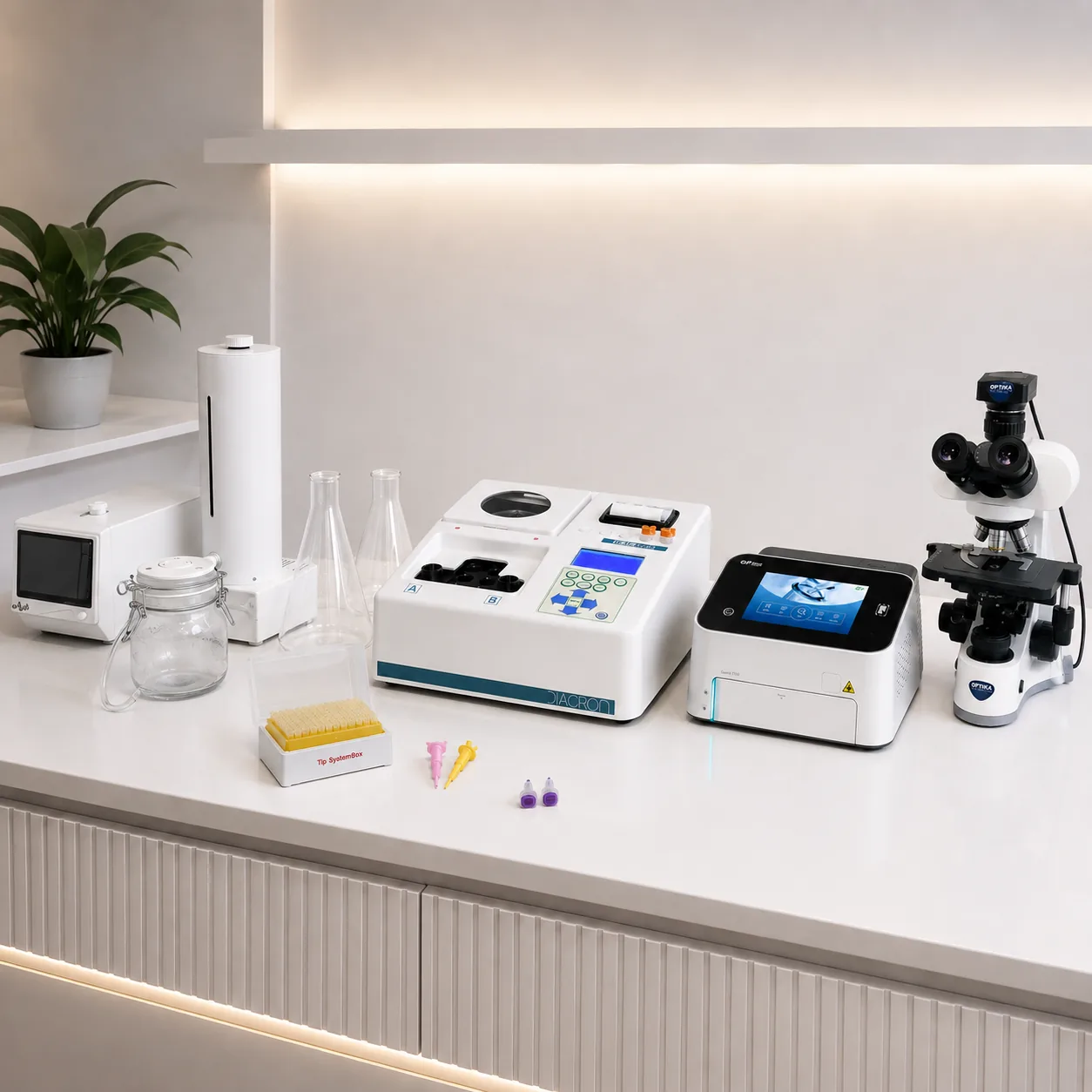
How the visit unfolds
Five stages, one visit, around two hours.
- 01
Conversation and medical history
We start from the timeline: when the complaints appeared, how they change over time, what has been tried so far and what medication or supplements you take.
It is good to bring previous tests, discharge summaries or consultations. We read them in context, so that markers which are already available and still current are not repeated unnecessarily.
- 02
Medical examination
Vital signs, the cardiovascular and respiratory systems, ECG and an examination by systems are assessed according to the particular case.
This is also the safety check before physical or device-based therapies are included.
- 03
Measurements
The objective part may include HRV analysis with a five-minute recording at rest, d-ROMs / BAP for oxidative load and antioxidant capacity, body composition, BMI, waist and selected POCT markers on site.
Where needed, the doctor may order or recommend additional laboratory markers — for example CRP / hs-CRP, IL-6, ferritin, vitamin D, TSH, cortisol, metabolic, hormonal or infectious markers as indicated.
- 04
Analysis and explanation
The doctor does not look at each result in isolation, but links it to the rest of the data, your complaints, the medical history and the individual risk factors.
The aim is to establish which findings are clinically significant and which processes they may point to — metabolic, inflammatory, oxidative, hormonal, autonomic or related to a past infection, sleep and recovery.
The results of the POCT tests done on site are interpreted during the visit itself and included in the overall medical assessment.
- 05
Written plan
After the examination you receive a written summary and an individual plan — which steps are suitable, in what sequence they should be taken, what needs to be tracked and when a follow-up examination should take place.
The plan may include guidance on nutrition, movement, sleep and recovery, additional tests, a consultation with another specialist or therapeutic procedures where medically indicated.
The plan does not commit you to undergoing procedures at the centre.
What the initial diagnostics include
Up to 10 groups of measurements and assessments, carried out within one structured visit.
Blood pressure, pulse, saturation, temperature and breathing — to assess the current state and safety before procedures.
Assessment of heart rhythm, rate and conduction. Used as part of the safety check before physical and device-based therapies.
Examination of the heart, lungs, abdomen, nervous system, joints and other systems according to the particular case.
A structured conversation about the complaints, previous illnesses, medication, supplements, sleep, nutrition, stress, physical activity and available tests.
A five-minute recording at rest to assess autonomic regulation, the stress response and recovery capacity.
Assessment of the body's oxidative load and antioxidant capacity, when they are included in the individual plan.
BMI, weight, waist, fat mass, muscle mass, visceral fat, body water and basal metabolism.
Rapid markers measured within the medical assessment, when they are suitable for the particular case. They are not considered on their own, but are interpreted by a doctor together with the symptoms and the other data.
Where indicated, the doctor assesses whether the complaints may have an infectious or post-infectious component. Where needed, additional tests are recommended — serology, PCR, microbiology, immunological or other targeted panels.
Blood count, inflammatory markers, metabolic markers, hormones, oxidative balance, HRV, body composition and medical history are considered together, not separately.
The aim is to build a clearer link between the complaints, the results and the possible leading factors behind the condition.
What you leave with
A written individual plan
Not just verbal advice, but a document with clear next steps — what is recommended, in what sequence and what makes sense to track.
A clear approach
The results help the doctor choose the most suitable approach for your case — with specific recommendations, possible therapies and markers to track.
See the solutionsA baseline for comparison
What is measured today is the starting point. At follow-up visits it can be seen whether there is an objective change, not only whether you feel better.
Freedom of choice
The initial diagnostics do not commit you to therapies at the centre. The plan stays with you — where and how you follow it is your decision.
Questions and answers
- What is the price and what does it include?
The initial diagnostics cost 420 €. They include a medical examination, a medical history, up to 10 groups of measurements and selected POCT markers on site, when they are suitable for the particular case.
Additional external laboratory, hormonal, infectious or imaging tests may be recommended at the doctor's discretion, if they are necessary.
- How much time should I set aside?
Around 2 hours. The examination, the functional measurements and the interpretation of the available results take place within the visit. The on-site POCT markers are discussed the same day.
- Should I bring my old tests?
Yes. Available laboratory, imaging and other medical documents are an important part of the picture. We read them in context and do not repeat, without reason, markers that have already been measured and are still current.
- Does it commit me to therapies at the centre?
No. The diagnostics are a standalone service. The written plan is yours and you can follow it wherever you decide.
- Does it replace my GP or my current treatment?
No. The diagnostics complement, but do not replace, your GP, the treating specialist or prescribed medication.
Do not change or stop a prescribed therapy without medical judgement. If the results point to a condition that requires another specialist, this is discussed openly and you receive a referral.
Start with precision diagnostics
One visit of around two hours — a medical examination, up to 10 groups of measurements and an individual written plan.
The next decisions are made on objective data, medical judgement and clearly discussed goals.