
TECAR therapy
TECAR is radiofrequency therapy (0.3–1.2 MHz) based on capacitive-resistive energy transfer (CRET). What makes it distinct: heat is not applied from outside but generated inside the tissue itself, where the current meets resistance.
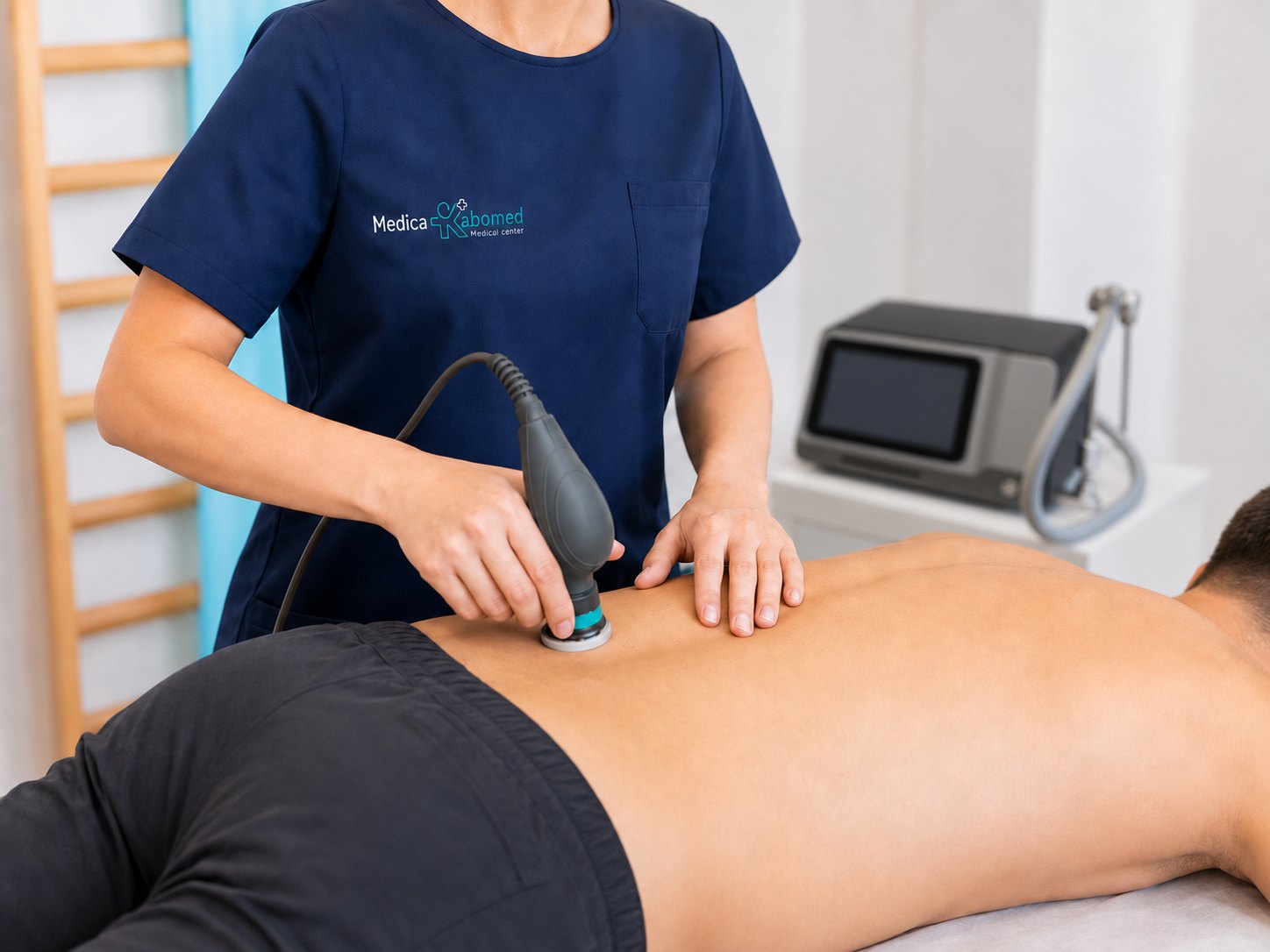
Capacitive-resistive transfer warms tissue in depth and accelerates regeneration.
How does it work?
The two modes are the method's two "lenses": capacitive (CET, insulated electrode) focuses on superficial soft tissue — muscle, lymph; resistive (RET) reaches depth — tendons, joints, bone, fascia.
It works by capacitive-resistive energy transfer: the high-frequency current generates heat within the tissue itself rather than applying it from outside. The warming widens vessels and speeds up microcirculation and cellular metabolism. The two modes are chosen by depth — capacitive acts closer to the surface on muscle and lymph, resistive reaches tendons, joints and fascia.
- Endogenous diathermyControlled internal warming causes vasodilation and speeds up microcirculation and metabolism in the treated area. The thermal response of 448 kHz CRET has been measured in humans in a controlled study (Kumaran & Watson, 2015).
- Pain modulationA rise in β-endorphins and a fall in prostaglandins are described — stronger endogenous analgesia and a weaker inflammatory signal.
- Drainage and elasticityWarming improves venous and lymphatic outflow and raises fascia and tendon elasticity — a staple of sports rehabilitation.
How does it go at our centre?
Capacitive-resistive radiofrequency therapy delivering energy into tissue, which may support local microcirculation, muscle relaxation, pain modulation and recovery.
- Session: 20–30 minutes depending on the area.
- The mode follows the depth of the problem: CET for superficial muscle, RET for joints, tendons and deep fascia.
- Common pairings: TECAR + PMCT for spasm and pain; TECAR + PBM for inflammation and recovery.
Combinations: TECAR + PMCT for spasm and pain; TECAR + PBM for inflammation and recovery.
What does it combine with — and why?
The combinations come from the protocols — each one has a physiological reason, not a sales one.
+ PEMF
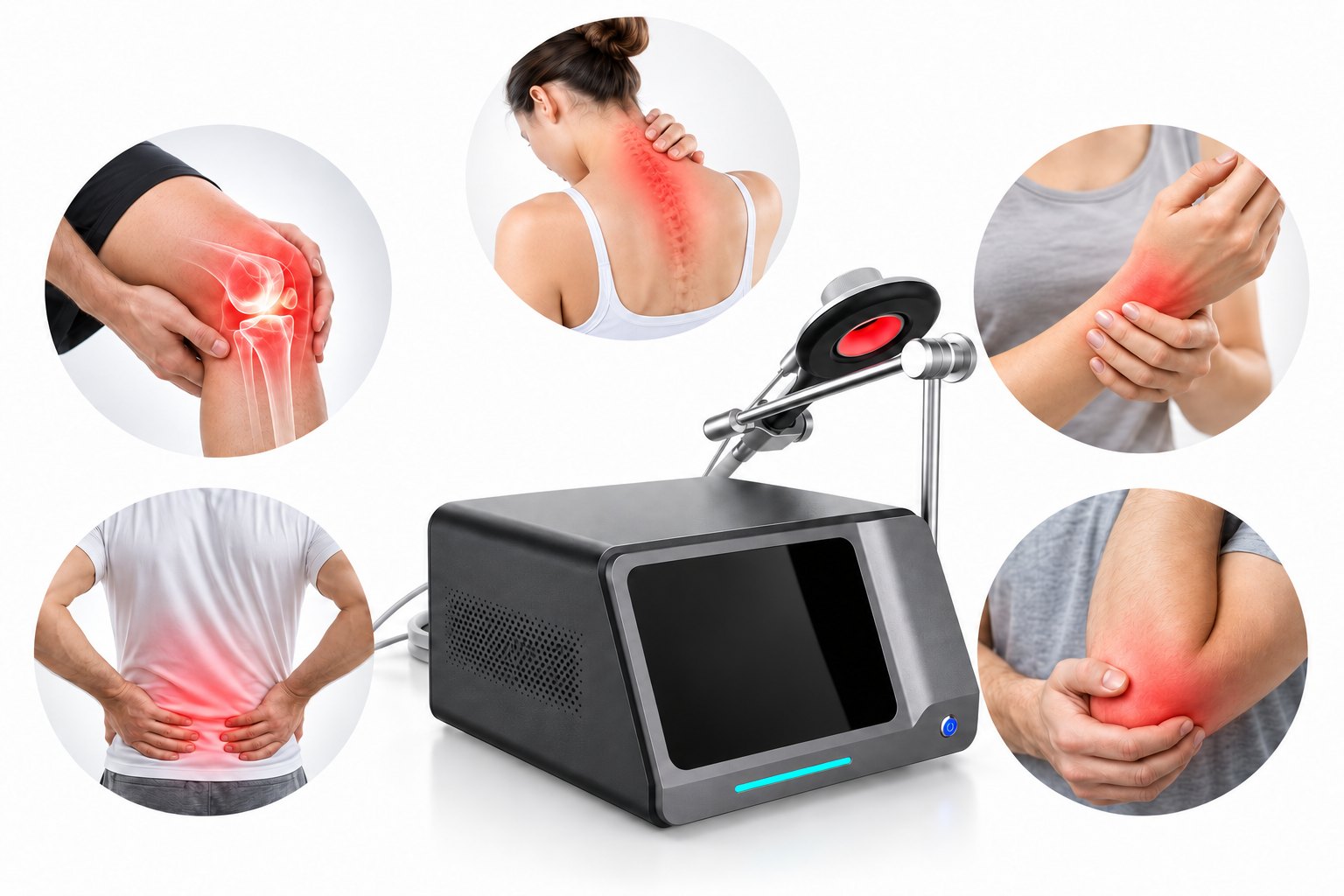
+ PMCT
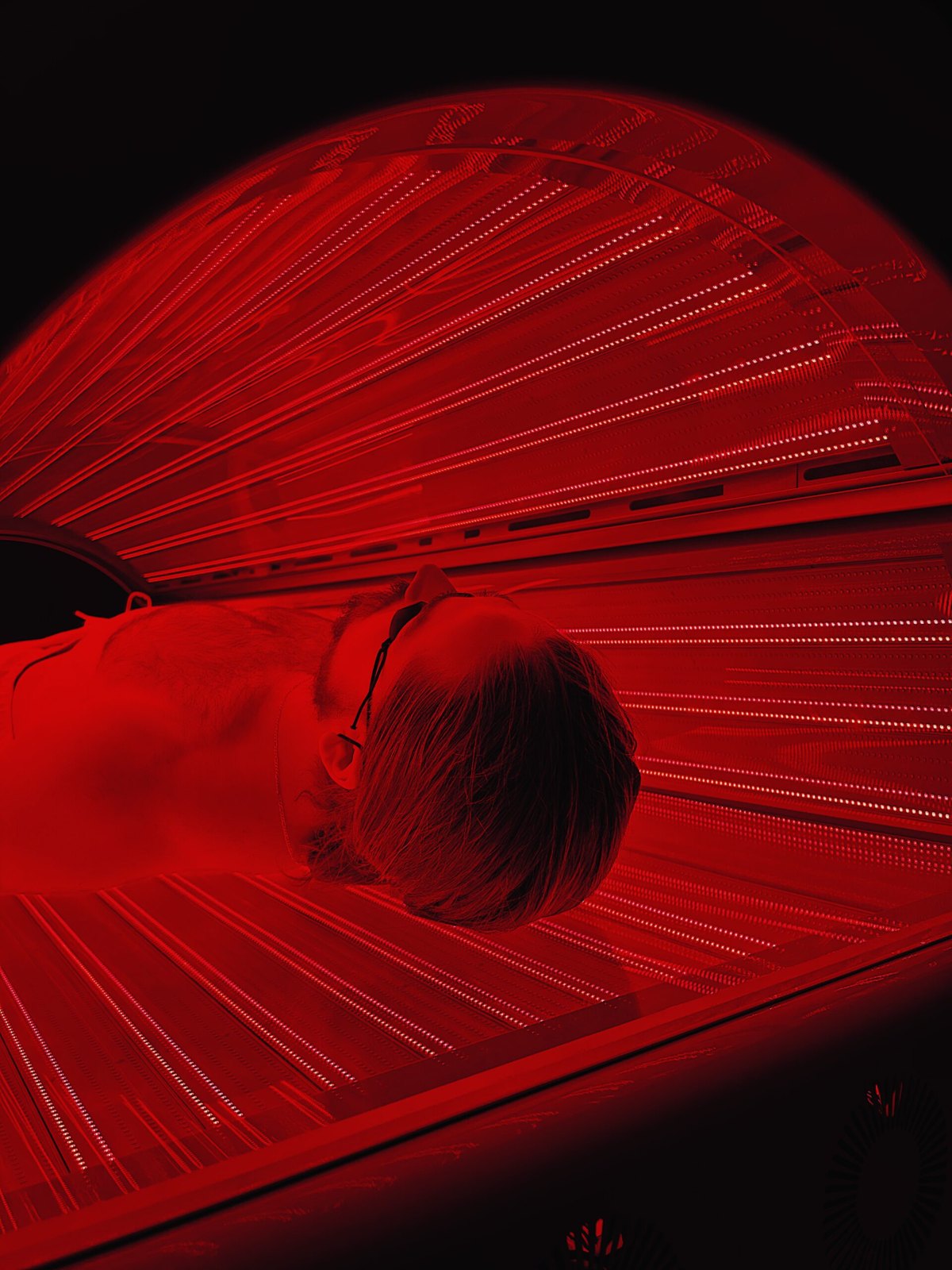
+ Photobiomodulation (PBM)
When is it not done?
Contraindications are checked before every procedure — which is why they stand here, before the booking, not at the door.
Contraindications
What it does not do
A doctor decides
Literature
- Kumaran B., Watson T. (2015). Thermal build-up, decay and retention responses to local application of 448 kHz capacitive resistive radiofrequency. Int J Hyperthermia. PubMed 26524223
- Paolucci T. и кол. (2020). Effects of capacitive and resistive electric transfer therapy in patients with painful shoulder impingement. J Int Med Res. PubMed 31680597
Start with precision diagnostics.
Whether this procedure suits you is decided at the assessment: ~2 hours, ten groups of measurements, a written plan — 420 €.